
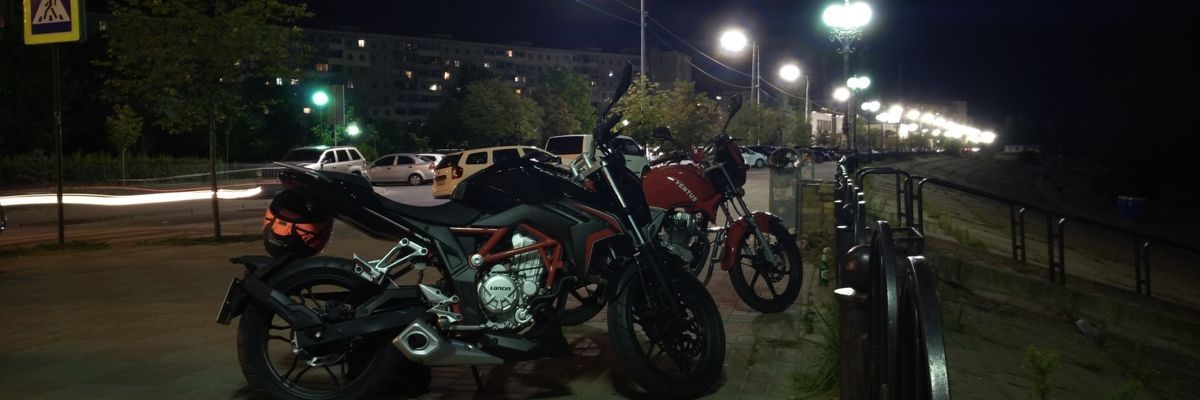
Carbureted versions of Loncin and Voge motorcycles are significantly cheaper and simpler than their fuel-injected counterparts in the same model lines. Furthermore, their systems are extremely straightforward and undemanding; in the event of a breakdown, repairs can often be performed right in a garage—without specialized equipment—simply by replacing the damaged part. Moreover, such repairs are "absurdly" inexpensive, especially when compared to the complexity and high cost of fuel-injection systems.
However, where there are advantages, there are inevitably drawbacks. The 300cc-class carburetor is highly sensitive to weather conditions; every year, as the temperature begins to drop, the same issues invariably crop up within our community.
Hard to start when cold? Stalling when pulling away? Stalling when you roll off the throttle? Losing power? Lacking pull? Backfiring through the exhaust? Choking or bogging down?
Yes—it’s all due to the drop in ambient temperature and changes in air humidity.
While the cause is clear, the consequences are not necessarily obvious:
1. As the air (gas) temperature decreases, the amount of oxygen per unit of volume increases—oxygen that the carburetor draws in to create the air-fuel mixture.
2. The ideal mixture for an engine is 1 part fuel to 14.7 parts air. This is straightforward for a fuel-injected system, but for a carburetor, achieving this balance is only possible under the specific conditions for which it was originally tuned. In other words, this applies to specific conditions of air temperature, humidity, and pressure. Consequently, as the temperature drops, the existing settings become ineffective, and the engine begins to run a "lean" mixture (too much air, too little fuel). Naturally, with a lean mixture, achieving optimal engine performance is no longer possible.
3. None of the "300" series models are equipped with a thermostat. As a result, during cold weather, the engine either takes a long time to reach its operating temperature or, in some cases, never warms up sufficiently—a condition that can be detrimental. This inevitably affects valve clearances, which disrupts the intake and exhaust processes and further degrades engine performance.
The end result is an incorrect air-fuel mixture combined with improper valve timing clearances—a system that is, by definition, physically incapable of operating correctly.
Possible solutions (if you intend to ride the motorcycle during cold weather):
- Re-adjust the carburetor. You need to enrich the fuel-air mixture: adjust the idle mixture using the idle mixture screw; adjust the mid-range performance by changing the position (height) of the carburetor needle; and adjust the high-RPM performance by changing the size (orifice diameter) of the main jet. Please note: once the weather warms up, you will need to revert these settings to their original baseline.
- Install a thermostat. A thermostat will help the engine reach its operating temperature more quickly and maintain it much more consistently. When Loncin developed the YF300 (LC178MN) engine—based on a Kawasaki design—they retained the housing space for a thermostat; therefore, you can easily install one yourself. However, keep in mind that this solution also brings new risks. First, as the weather warms up, the thermostat may become a hindrance. Second, installing this component means you will also need to monitor the temperature—essentially implementing temperature control—to ensure you don't miss a situation where the valve might get stuck in the closed position.


